Paint Sheens Explained: A Guide to Finishes for Your Walls
Understanding Paint Sheen: The Key to Your Home's Finish
Choosing the right paint color for your home is a significant decision, but equally important, and often overlooked, is the paint's sheen. The sheen refers to the level of gloss or reflectivity a dried paint surface possesses. It dictates not only the aesthetic appeal of your walls but also their durability, washability, and how they interact with light. Whether you're selecting an interior paint for a nursery or choosing a finish for your living room, understanding sheen levels is fundamental to achieving the desired look and functionality. This paint sheen guide will walk you through the various options, helping you make informed decisions that enhance your living spaces.
Why Your Paint's Sheen Matters
The type of sheen you select plays a crucial role in the overall atmosphere and practicality of your home. A higher gloss finish can make a room appear brighter and more expansive by reflecting light, while a flatter finish absorbs light, creating a softer, more intimate feel. Beyond aesthetics, your sheen choice directly impacts how well your walls withstand daily wear and tear. High-traffic areas, for instance, benefit from more durable, scrubbable finishes, whereas less active spaces might prioritize a more subtle, elegant appearance. Making an educated choice ensures that your paint not only looks good but also performs effectively for years to come, aligning with your lifestyle and the specific demands of each room. Whether you're a weekend DIY painter or hiring a pro, understanding sheen is the first step toward a successful project.
The Science Behind Paint Sheen: What Makes It Glossy or Flat?
Before diving into the different sheens, it helps to understand what actually creates the difference between a flat finish and a mirror-like high-gloss. It all comes down to the paint's formulation and specifically, the ratio of pigment to binder (resin).
Pigment volume concentration (PVC) is the key factor. Pigments are the tiny particles that give paint its color, while the binder is the resin (typically acrylic or alkyd) that forms a continuous film as the paint dries. In a flat or matte paint, the PVC is high and there's a large proportion of pigment particles relative to binder. When the paint dries, those pigment particles protrude slightly above the resin film, creating a microscopically rough surface. Light hitting this rough surface scatters in many directions (called diffuse reflection), so very little bounces directly back to your eye. The result: no shine.
In a glossier paint finish, the PVC is much lower. The binder dominates, flowing over and around the fewer pigment particles to create a smoother, more uniform film. When light hits this smooth surface, it reflects more uniformly (called specular reflection) the same principle that makes a calm lake reflect the sky. The smoother the dried film, the more light bounces back at a consistent angle, and the glossier the surface appears.
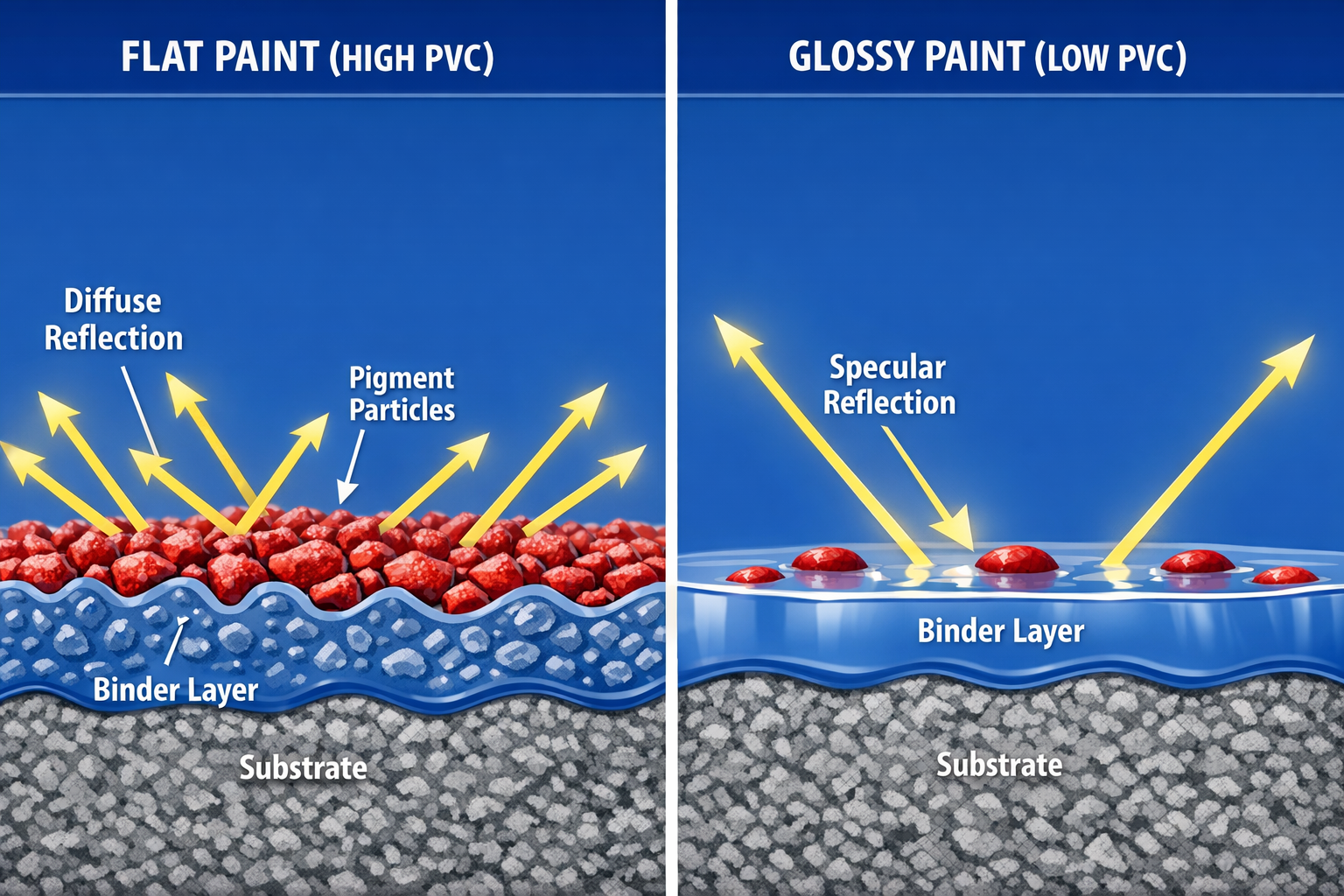
Figure 1.(Flat Paint) Shows the light reflection on a dried surface with minimal binder layer.
Figure 2. (Glossy Paint) Shows the light reflection on a dried surface with larger binder layer.
This is also why higher-sheen paints tend to be more durable. That thicker resin layer creates a harder, more continuous film that resists moisture, stains, and abrasion. Flat paints, with their rougher surface and less resin, are more porous and more susceptible to scuffs and staining, but that same texture is exactly what makes them so forgiving on textured walls and imperfect surfaces.
Leading paint manufacturers like Benjamin Moore and Sherwin Williams invest heavily in resin technology to push performance boundaries, developing formulations that offer better durability and washability even in lower-sheen products. Modern acrylic-latex types of paint have improved dramatically, meaning today's eggshell or satin finishes can perform far better than their counterparts from a decade ago.
The Spectrum of Sheens: From Flat to High-Gloss
Paint sheens exist on a spectrum, ranging from completely non-reflective to highly reflective. Each level offers distinct characteristics, and understanding them will empower you to select the best paint finish for your specific needs and preferences.
Flat/Matte Finish
A flat or matte paint is the least reflective option available. It absorbs light rather than reflecting it, creating a soft, velvety appearance on your walls. This finish is excellent for concealing minor surface imperfections such as bumps, nail holes, or spackle marks, as its lack of shine does not highlight them. It's particularly effective on textured walls where a glossy option would emphasize every bump and ridge. However, flat paint is generally less durable and more difficult to clean than higher-sheen options. It can show scuffs and marks more readily and may not withstand vigorous scrubbing without damaging the finish.
Best for: Low-traffic areas like formal dining rooms, adult bedrooms, or ceilings where elegance and imperfection-hiding are prioritized over washability.
Eggshell Finish
Eggshell paint offers a very subtle, low-sheen finish, reminiscent of an eggshell's delicate luster. It has slightly more reflectivity than flat paint, providing a bit more durability and washability without being overtly shiny. This makes it a popular choice for many homeowners seeking a balance between aesthetics and practicality. Eggshell still performs well at camouflaging minor surface flaws due to its low reflectivity, while offering improved durability over flat.
Best for: Living rooms, family rooms, and bedrooms. Its gentle sheen adds a touch of sophistication while offering improved resilience compared to flat paint.
Satin Finish
Satin paint presents a smooth, pearl-like luster that is noticeably more reflective than eggshell, yet not as shiny as semi-gloss. This mid-range type of sheen is highly versatile and durable, offering excellent washability and resistance to moisture. Its slight sheen creates a richer, deeper color appearance and the surface stands up well to cleaning with a damp cloth. While it shows imperfections more than flat or eggshell, its benefits often outweigh this drawback for many applications. Satin is one of the most versatile types of paint, working equally well as an interior or exterior paint.
Best for: Kitchens, bathrooms, children's bedrooms, and utility rooms. Its durability and ease of cleaning make it suitable for areas prone to splashes, fingerprints, and general wear.
Semi-Gloss Finish
Semi-gloss paint has a distinct, radiant shine that is much more reflective than satin. This elevated sheen level provides exceptional durability and makes the surface very easy to clean. Dirt, grease, and grime wipe away effortlessly, and the finish is highly resistant to moisture and scuffs. Semi-gloss offers superior resilience, making it ideal for surfaces that take a beating. However, its high sheen also means that semi-gloss will highlight any imperfections on the wall surface, so thorough preparation is essential before application.
Best for: Trim, baseboards, doors, kitchen cabinets, and areas that require frequent cleaning, such as laundry rooms or mudrooms. Its robust nature makes it ideal for elements that experience direct contact and high wear.
High-Gloss Finish
High-gloss paint is the most reflective and durable finish available, offering a mirror-like shine. This finish is exceptionally hard, extremely resistant to moisture, and incredibly easy to clean, making it the most resilient option. Because of its intense reflectivity, high-gloss paint will magnify every single imperfection on a surface and it is not forgiving on rough or uneven surfaces. Achieving a flawless high-gloss finish demands meticulous surface preparation and expert application, often best left to a pro. It creates a dramatic, modern, or luxurious aesthetic.
Best for: Furniture, accent pieces, kitchen cabinets, interior doors, or areas where a bold statement and maximum durability are desired. It is less commonly used on entire walls due to its intense shine and the meticulous preparation it requires.
Choosing the Right Sheen for Each Room in Your Home
Selecting the appropriate paint sheen for each room involves considering the room's function, the amount of traffic it receives, and the aesthetic you wish to achieve. Tailoring your choices to specific areas ensures both beauty and practicality.
Living Rooms and Bedrooms: Balancing Style and Practicality
For living rooms and bedrooms, you generally seek a balance between an inviting aesthetic and reasonable durability. These rooms are often places of relaxation and personal expression.
Living Rooms: An eggshell or satin finish often works best here. Eggshell provides a sophisticated, subtly warm look that subtly reflects light and is reasonably durable. Satin offers a slightly richer appearance and enhanced washability, which can be beneficial in busy family living areas where spills or marks might occur.
Bedrooms: Flat/matte or eggshell finishes are popular for bedrooms. A flat finish creates a serene and cozy atmosphere, absorbing light for a softer feel, and is excellent for hiding minor wall imperfections. Eggshell provides a touch more durability and a subtle sheen without being distracting, making it a practical yet elegant choice. When choosing your paint color for bedrooms, keep in mind that a lower sheen will mute the tone slightly compared to the swatch.
Kitchens and Bathrooms: Prioritizing Durability and Cleanliness
Kitchens and bathrooms are high-moisture, high-traffic areas that require paint finishes capable of withstanding splashes, humidity, and frequent cleaning.
Kitchens: Satin or semi-gloss finishes are ideal for kitchen walls. Satin offers excellent durability and washability, standing up well to grease and food splatters. Semi-gloss provides even greater protection and is incredibly easy to clean, making it perfect for backsplashes or areas near cooking zones. For kitchen cabinets, semi-gloss or even high-gloss provides a protective, easily maintained surface. Major brands like Benjamin Moore offer cabinet-specific formulas designed for this exact purpose.
Bathrooms: Similar to kitchens, satin or semi-gloss are the preferred choices for bathrooms. Their resistance to moisture and mildew, coupled with their easy-to-clean surfaces, makes them highly effective in humid environments. Semi-gloss is particularly good for walls directly adjacent to showers or tubs due to its superior water resistance.
Hallways and High-Traffic Areas: Resilience is Key
Hallways, entryways, and stairwells are constantly subjected to bumps, scuffs, and fingerprints. Durability and ease of cleaning are paramount in these zones.
Hallways and Entryways: A satin or semi-gloss is highly recommended for these busy areas. Satin offers a good balance of subtle sheen and enhanced durability that can withstand daily contact. Semi-gloss provides maximum protection and makes cleaning scuff marks and dirt significantly easier, ensuring your walls maintain a fresh appearance even with constant activity. Don't forget the baseboards, semi-gloss is the standard choice since they're constantly kicked, bumped, and scuffed.
Ceilings: The Often Overlooked Surface
Ceilings are often an afterthought, but selecting the right sheen can significantly impact the room's overall feel and hide minor imperfections.
Ceilings: Almost universally, a flat/matte finish is recommended for ceilings. Its non-reflective nature helps to mask minor imperfections, such as uneven plaster or drywall seams, which are often more visible under direct light. Flat paint also prevents light from bouncing down, creating a softer, more uniform overhead appearance. Most product lines from brands like Sherwin Williams include dedicated ceiling formulas with an ultra-flat sheen.
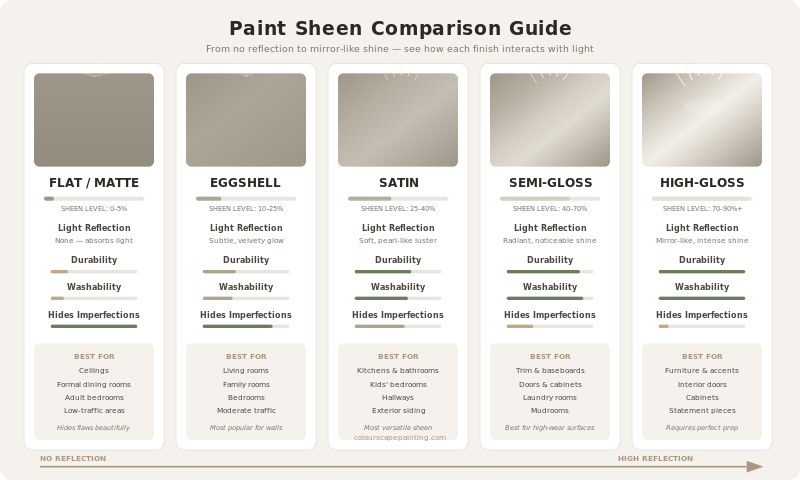
Paint Sheen Comparison guide: Showing light reflection
Exterior Surfaces: Standing Up to the Elements
While this guide focuses primarily on interior spaces, it's worth noting that exterior paint follows similar sheen logic. A satin or semi-gloss exterior paint is typically recommended for siding, as it provides good weather resistance and holds up to rain, UV exposure, and temperature swings. Flat finishes work well on surfaces like stucco where you want to hide imperfections, though it requires more frequent maintenance.
Factors to Consider When Selecting Your Paint Sheen
Beyond the specific room, several general factors should guide your paint sheen selection. These considerations directly impact your long-term satisfaction with your choice.
Durability and Washability: How Easily Can You Clean It?
The higher the sheen, the more durable and washable the wall paint generally is. This is a crucial factor for areas that experience frequent contact or are prone to dirt and moisture. If you anticipate needing to wipe down walls regularly, a satin, semi-gloss, or high-gloss finish will be far more forgiving and resilient than a flat or eggshell option. Look for products labeled as scrubbable if washability is a top priority with many modern formulations now offer enhanced stain resistance even in lower-sheen options. Consider your lifestyle; active households with children or pets will greatly benefit from higher durability.
Light Reflection: How Will It Affect Your Space?
Paint sheens interact with light in distinct ways, profoundly influencing the atmosphere of a room.
Higher Sheen (Semi-Gloss, High-Gloss): These finishes reflect a significant amount of light, making rooms feel brighter and more spacious. They can add a lively, energetic quality but may also create glare, especially in rooms with abundant natural light.
Lower Sheen (Flat, Eggshell, Satin): These finishes absorb more light, creating a softer, more intimate, and often more sophisticated ambiance. They can make a large room feel cozier but might make a small, dimly lit room feel even smaller.
Consider the natural and artificial light sources in your room and how you want the light to behave within that space. Your chosen color will also appear differently depending on the sheen — the same shade will look slightly more saturated in a satin than in a flat.
Hiding Imperfections: What Finish Best Conceals Flaws?
The reflectivity of a finish directly correlates with its ability to hide surface imperfections.
Flat/Matte: This is the champion of concealing flaws. Its complete lack of sheen means light does not bounce off bumps, dents, or uneven textures, making them less noticeable. If your walls are not perfectly smooth — especially older homes with uneven surfaces — a flat finish can be a homeowner's best friend.
Higher Sheens (Satin, Semi-Gloss, High-Gloss): As the sheen increases, so does its tendency to highlight every imperfection. A high-gloss finish will act like a magnifying glass for any bumps, divots, or uneven application, demanding meticulous surface preparation for a pristine result.
Maintenance: How Much Effort Are You Willing to Put In?
Consider the level of maintenance you are prepared to undertake. A flat finish might require more frequent touch-ups or more careful cleaning, as vigorous scrubbing can damage its delicate surface. Higher-sheen paints, while initially requiring more effort in surface preparation, are typically easier to maintain in the long run, standing up to cleaning and wear with greater resilience. For homeowners tackling projects on weekends, choosing a more durable sheen upfront can save significant effort down the road. Your choice should align with your desire for effortless upkeep versus a particular aesthetic.
Expert Tips for a Flawless Finish
Achieving a professional-looking paint job involves more than just selecting the right color and sheen; proper preparation and technique are equally vital. Whether you're a DIY enthusiast or working with a professional painter, these tips apply.
Test Swatches: See It Before You Commit
Before committing to a paint sheen for an entire room, purchase small sample pots and paint swatches directly onto your wall. Observe these swatches at different times of day and under various lighting conditions (natural and artificial). The same sheen can look dramatically different depending on the light like a satin may look almost glossy in direct sunlight and nearly flat in a dimly lit corner. This step helps prevent costly mistakes and ensures you are completely satisfied with your choice.
Surface Preparation: The Foundation of Success
The quality of your finished result is only as good as the surface it's applied to. Thorough surface preparation is paramount, especially when working with higher sheens that highlight imperfections.
- Cleanliness: Ensure your walls are clean, free of dust, dirt, and grease. Use a mild detergent and water, then rinse thoroughly and allow to dry completely.
- Repairs: Fill any holes or cracks with spackle or joint compound, then sand smooth.
- Sanding: Lightly sand glossy surfaces to create a profile for the new paint to adhere to.
- Dullness: Ensure the entire surface is dull and free of any glossy spots that could lead to adhesion issues.
Pay special attention to trim and door frames — these high-contact surfaces need thorough prep to ensure the best result.
Primer Use: Enhancing Adhesion and Finish
Applying a high-quality primer before painting is a critical step that enhances the durability and appearance of your chosen sheen.
- Adhesion: Primer creates an ideal surface for the paint to adhere to, promoting better coverage and preventing peeling or chipping, particularly when painting over previously painted surfaces or new drywall.
- Uniformity: It seals porous surfaces, ensuring that the topcoat dries evenly and consistently, preventing blotchiness or uneven sheen.
- Stain Blocking: Specific primers can block stains from bleeding through the new paint, which is especially important when changing dark colors to light ones.
- Color True: Primer helps the true color of your paint emerge, as it provides a neutral, uniform base.
A Note on DIY vs. Hiring a Professional
For most flat, eggshell, and satin applications on walls, a DIY approach is perfectly manageable with proper preparation. However, semi-gloss and especially high-gloss finishes on large surfaces are significantly more demanding because roller marks, brush strokes, and lap lines are all magnified. If you're planning a high-gloss treatment or tackling a large-scale project, consulting a professional painter can save time, frustration, and ultimately deliver a superior result.
Making Your Final Decision: Confidence in Your Choice
By using this paint sheen guide and carefully considering each option, evaluating the specific needs of each room in your home, and incorporating expert preparation tips, you are now equipped to make confident choices. Remember, the right paint finish not only elevates the aesthetic appeal of your home but also contributes to its longevity and ease of maintenance. Take your time, test your options, and approach your painting project with the knowledge that your decisions will result in a beautifully finished, practical, and enduring space that you can truly enjoy. If you require further assistance or personalized recommendations for your home, do not hesitate to contact a professional painting service to ensure a flawless and lasting finish.