Bought a Home in Reno–Tahoe? Why You Should Paint Before Moving In
Buying a home in Reno, Sparks, Truckee, Incline Village, or South Lake Tahoe comes with a long list of decisions. Once the inspection is complete and important issues such as roof leaks, plumbing leaks, drainage problems, and moisture intrusion have been addressed, painting should move near the top of your priority list.
The best time to complete interior painting, drywall repairs, exterior painting, and deck staining is often the short period after you receive the keys but before your furniture and belongings arrive.
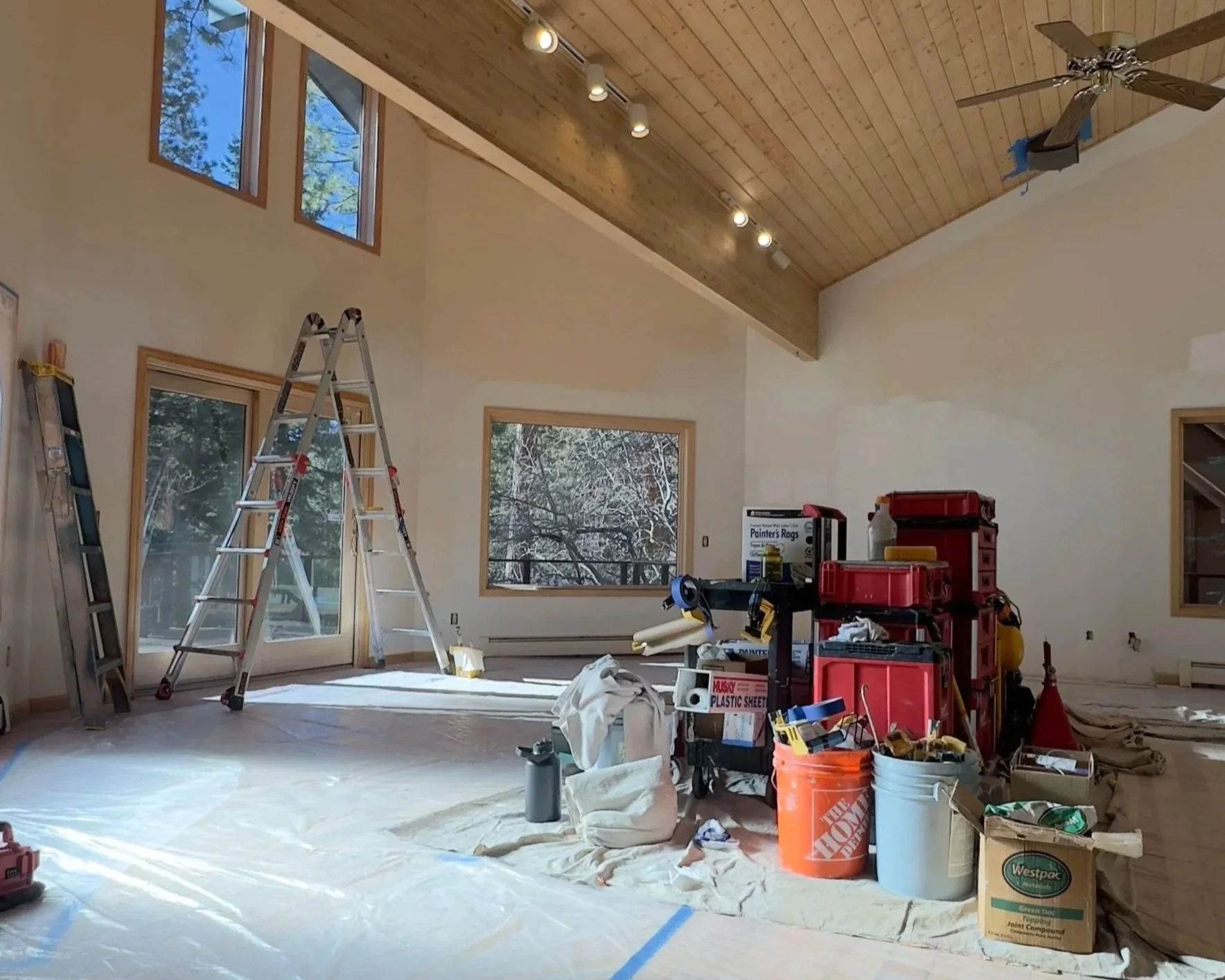
Planning is key!
You do not necessarily have to wait until closing to begin planning. With permission from the seller and coordination through your real estate agent, a painting contractor may be able to perform an initial assessment during escrow. That gives you time to define the scope, select colors, reserve a place on the schedule, and prepare for work to begin soon after the home becomes yours.
For Reno–Tahoe homeowners, this preparation is especially valuable. Exterior projects must be planned around strong sun, dry conditions, mountain weather, cold nights, and shorter seasonal work windows.
This guide assumes that the home has already been inspected and that active leaks, moisture sources, and major structural or mechanical problems have been corrected.
The Best Painting Window: After You Get the Keys, Before You Move In
Many buyers plan to paint “eventually” after moving in. Unfortunately, once the moving truck arrives, painting becomes more complicated.
Furniture must be moved and covered. Closets have to be emptied. Decorations, electronics, window coverings, and personal belongings must be protected. Drywall sanding creates dust, and daily life must be planned around ladders, drop cloths, drying paint, and restricted access to rooms.
An empty home gives the painting crew clear access to:
Walls, ceilings, doors, and trim
Closets, shelving, and built-ins
Baseboards and areas behind appliances
Drywall damage hidden by the previous owner’s furniture
Exterior doors, siding, decks, and railings
High walls, stairwells, and vaulted ceilings
Completing the work before move-in can also make the project more efficient. Painters spend less time moving and protecting belongings, drywall repairs are easier to contain, and the entire home can be completed in a logical sequence.
Most importantly, you get to move into a finished home instead of living through a construction project.
Start Planning During Escrow
You may not own the property during escrow, but you can often begin the planning process.
Any access should be approved by the seller and coordinated with your real estate agent. The purpose of this visit is not to begin work. It is to gather information and prepare an accurate painting plan.
What Happens During a Pre-Closing Painting Assessment?
A contractor can evaluate:
The condition of the interior walls and ceilings
Nail holes, dents, cracks, and failed drywall patches
Water stains from leaks that have already been repaired
Existing wall texture and areas requiring texture matching
Peeling, chalking, fading, or cracking exterior coatings
Unpainted or weathered wood siding and trim
Deck and railing condition
Access requirements for high walls or steep terrain
The number of colors and finishes needed
Whether cabinets, doors, ceilings, or closets are included
Possible lead-safe requirements in older homes
Measurements, photographs, and notes gathered during escrow can be used to build a detailed estimate. You can then make decisions before closing instead of spending the first several weeks of ownership collecting bids and waiting for an opening in a contractor’s schedule.
What You Can Decide Before Receiving the Keys
Before closing, homeowners can usually work through several planning decisions:
Choose the rooms and exterior surfaces to be painted.
Decide whether drywall repair and texture work are needed.
Select preliminary colors and sheen levels.
Confirm whether trim, doors, ceilings, and closets are included.
Check HOA or neighborhood color requirements.
Reserve a tentative project window after closing.
Coordinate painting with flooring, electrical, carpentry, or other contractors.
Actual work should generally begin only after you have legal possession of the home unless a separate written agreement allows earlier access.
Why Drywall Repairs Should Be Completed Before Interior Painting
Fresh paint will not hide poor drywall work. In many cases, new paint actually makes dents, uneven patches, raised tape joints, and texture differences more noticeable.
That is why drywall preparation should be included in the painting plan rather than treated as an afterthought.
Common Drywall Repairs in Recently Purchased Homes
A pre-move-in drywall scope may include:
Filling nail and anchor holes
Repairing dents and deep gouges
Retaping cracks or loose drywall seams
Correcting visible previous repairs
Matching orange-peel, knockdown, or other wall textures
Repairing damaged corners
Patching holes left by removed televisions or shelving
Sealing repaired water stains
Skim coating uneven walls
Removing unwanted wall texture where practical
Water stains should be evaluated carefully. Even when the original leak has been repaired, the area must be dry and properly sealed with an appropriate stain-blocking primer before finish paint is applied.
Drywall work also creates sanding dust. Completing it while the house is empty keeps that dust away from furniture, clothing, rugs, and electronics.
The Recommended Pre-Move-In Painting Sequence
Good results depend on completing the work in the correct order.
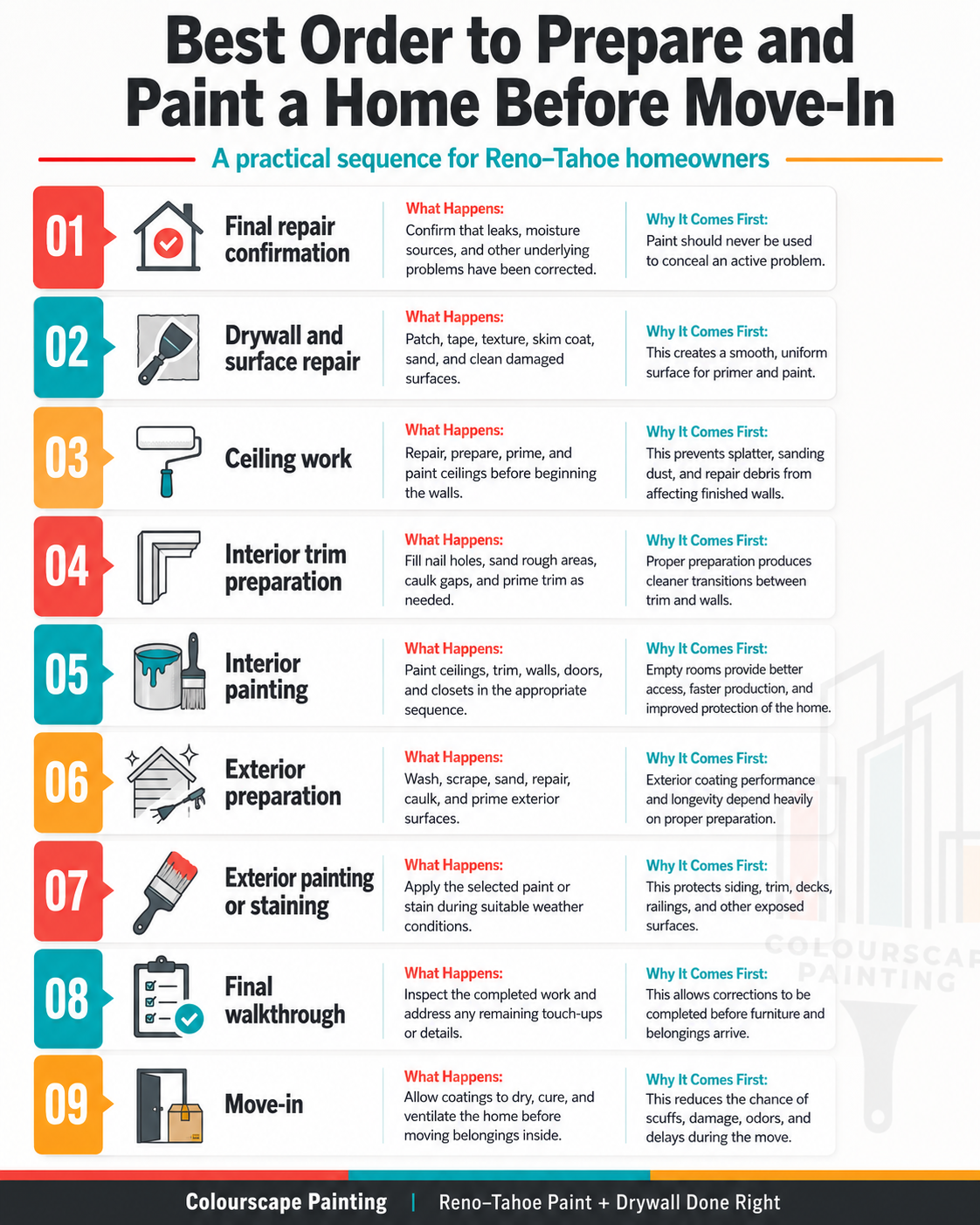
Sequence chart made by Colourscape Painting
Why Local Conditions Matter in Reno, Sparks, and Tahoe
Painting requirements can change considerably between the lower elevations of Reno and Sparks and mountain communities such as Truckee, Incline Village, and South Lake Tahoe.
Exterior Painting in Reno and Sparks
Exterior painting in Reno must account for strong sun, dry air, wind, dust, and large temperature changes. Reno sits at approximately 4,400 feet, and National Weather Service climate records document its dry conditions and wide weather variability.
These conditions can contribute to:
Fading on heavily exposed elevations
Drying and cracking of unprotected wood
Dust contamination during preparation
Paint drying too quickly on hot or windy days
Premature coating failure when surfaces are not properly cleaned
Separation around failed caulking joints
A contractor should evaluate each side of the home separately. South- and west-facing surfaces frequently require more preparation because they receive significant sun exposure.
The goal is not simply to apply another coat. It is to identify why the previous coating aged and prepare the surface accordingly.
Exterior Painting in Truckee and Lake Tahoe
Mountain homes face a different combination of conditions. Cold nights, snow, seasonal moisture, sun exposure, and freeze-thaw cycles can be hard on siding, trim, logs, decks, and railings.
National Weather Service information for the Greater Lake Tahoe area shows how quickly daytime and nighttime temperatures can separate, even during otherwise favorable weather.
Exterior work in these communities requires careful scheduling. The surface temperature, overnight low, moisture level, shade, and expected curing period all matter. A warm afternoon does not automatically mean the coating will have enough time to cure before temperatures drop.
This is why an exterior assessment during escrow is valuable. Even when the project cannot begin immediately, the contractor can identify repairs, recommend a coating system, and help you target an appropriate weather window.
Should Interior and Exterior Painting Be Done at the Same Time?
They can often be coordinated, but exterior work remains dependent on the weather.
Interior drywall repair and painting can usually proceed soon after closing, provided the home has heat, ventilation, electricity, and stable indoor conditions.
Exterior work may be completed during the same period when temperatures and surface conditions are appropriate. When they are not, Colourscape Painting can separate the project into two phases:
Phase one: Complete drywall repairs and interior painting before move-in.
Phase two: Complete exterior painting or staining during the next suitable weather window.
This approach still gives you the primary benefit of moving into a clean, finished interior while ensuring the exterior is not rushed under poor conditions.
What About Deck Staining in Lake Tahoe?
Deck staining in Lake Tahoe should be treated as a surface-protection project, not just a color change.
Before staining, the deck should be checked for:
Loose or damaged boards
Failed fasteners
Rot or persistent moisture
Peeling film-forming coatings
Uneven previous stain
Heavy sun exposure
Snow-storage areas
Poor drainage around stairs and posts
The best stain for high-altitude homes depends on the wood species, previous coating, exposure, desired appearance, and willingness to perform future maintenance. A product that works well on a shaded cedar deck may not be the best choice for a fully exposed pine railing.
Preparation may involve cleaning, stripping, sanding, brightening, or spot repair. Staining over a failing product without removing loose material usually produces a short-lived result.
Check HOA and Tahoe-Area Requirements Early
Some neighborhoods and homeowner associations require approval before exterior colors are changed. Properties in the Lake Tahoe Basin may also be affected by scenic-quality or project-review requirements depending on the location and scope of the work. TRPA recommends confirming whether a project needs review before beginning, and its code includes scenic standards for certain properties and corridors.
Before ordering exterior paint or stain:
Review HOA architectural guidelines.
Confirm whether the existing color must be maintained.
Submit color samples when approval is required.
Check whether the property has special scenic restrictions.
Verify that planned repairs do not trigger additional permits.
Resolving these questions during escrow can prevent scheduling delays after closing.
How Painting Before Move-In Can Affect Cost
Painting an empty house is not automatically inexpensive. The final price still depends on preparation, access, number of colors, coating quality, drywall condition, and the size of the home.
However, an empty house may reduce avoidable labor associated with:
Moving furniture from room to room
Protecting personal belongings
Removing and reinstalling decorations
Working around occupied bedrooms
Splitting the project into several small visits
Repeating setup and cleanup
Repairing move-related damage after painting
When researching house painting cost in Truckee, Reno, or Tahoe, ask whether the estimate includes drywall repair, texture matching, primer, ceilings, trim, doors, closets, surface cleaning, and required access equipment. Two estimates can appear very different simply because they include different scopes of work.
A detailed written estimate is more useful than a price based only on square footage.
A Practical Escrow-to-Move-In Checklist
During Escrow
Review the inspection report.
Confirm that active leaks and moisture problems will be repaired.
Ask the realtor to coordinate access for a painting assessment.
Photograph walls, ceilings, trim, siding, and decks.
Identify unwanted colors and damaged surfaces.
Request a detailed interior and exterior proposal.
Begin selecting colors.
Review HOA or Tahoe-area requirements.
Discuss the expected closing and move-in dates.
Reserve a tentative painting window.
Immediately After Closing
Confirm that the property is empty and accessible.
Verify that water-damaged surfaces are dry.
Complete drywall repairs and texture matching.
Remove unwanted hardware, anchors, and shelving.
Protect floors, cabinets, fixtures, and remaining finishes.
Prime repaired or stained areas.
Paint ceilings, trim, walls, closets, and doors.
Begin exterior work when weather permits.
Complete a final walkthrough before moving in.
Before the Moving Truck Arrives
Allow adequate drying time.
Ventilate the home.
Confirm that doors and windows operate properly.
Check closets and areas behind doors.
Complete final touch-ups.
Photograph the finished work for your records.
Keep labeled touch-up paint for future use.
Frequently Asked Questions
Can a painter provide an estimate while the home is in escrow?
Often, yes. The visit must be approved and coordinated through the appropriate real estate professionals. The contractor can inspect surfaces, take measurements, discuss options, and prepare an estimate without beginning work.
Should painting begin before closing?
In most situations, the safer approach is to complete the assessment during escrow and begin work after closing, once you have the keys and legal possession. Earlier work should occur only when the necessary parties have provided clear written authorization.
Is it better to paint before or after installing new flooring?
The answer depends on the type of flooring and the amount of preparation involved. Dust-producing demolition and floor sanding should generally happen before final painting. Final sequencing should be coordinated between the flooring and painting contractors so walls, trim, and finished floors are protected.
Should the entire interior be painted?
Not necessarily. Some buyers repaint every room for a consistent finish, while others prioritize the main living areas, bedrooms, ceilings, or rooms with visible damage. An assessment can separate essential preparation from optional cosmetic upgrades.
Can exterior painting be completed during winter in Tahoe?
Exterior painting is highly dependent on the coating requirements, surface temperature, moisture, overnight lows, and curing conditions. Interior work may proceed during colder months, but exterior work should not be forced into an unsuitable weather window.
How early should homeowners contact a painting contractor?
Start during escrow when possible. Early planning provides more time to inspect the home, define the scope, obtain approvals, select colors, and coordinate the project around closing and moving dates.
Move Into a Finished Home, Not an Ongoing Project
The days between receiving the keys and moving into a new home are extremely valuable.
By using the escrow period for assessment and planning, you can be ready to begin drywall repair, interior painting, exterior preparation, and staining soon after closing. The work can be completed without furniture in the way, without exposing your belongings to dust, and without disrupting your daily routine.
Preparation is what makes that window successful. The earlier the surfaces, colors, schedule, approvals, and contractor responsibilities are defined, the smoother the project will be.
Colourscape Painting helps homeowners plan interior and exterior painting projects throughout Reno, Sparks, Truckee, Incline Village, South Lake Tahoe, and surrounding communities.
Call Colourscape Painting for a free estimate in Reno or Tahoe. We can coordinate an initial property assessment during escrow with your realtor and prepare a painting plan for the period between closing and move-in.